
200W+
智慧飯店實施方(fāng)案

2026年09月22日 09:35 查看量:138 修改:91视频在线先創Hank
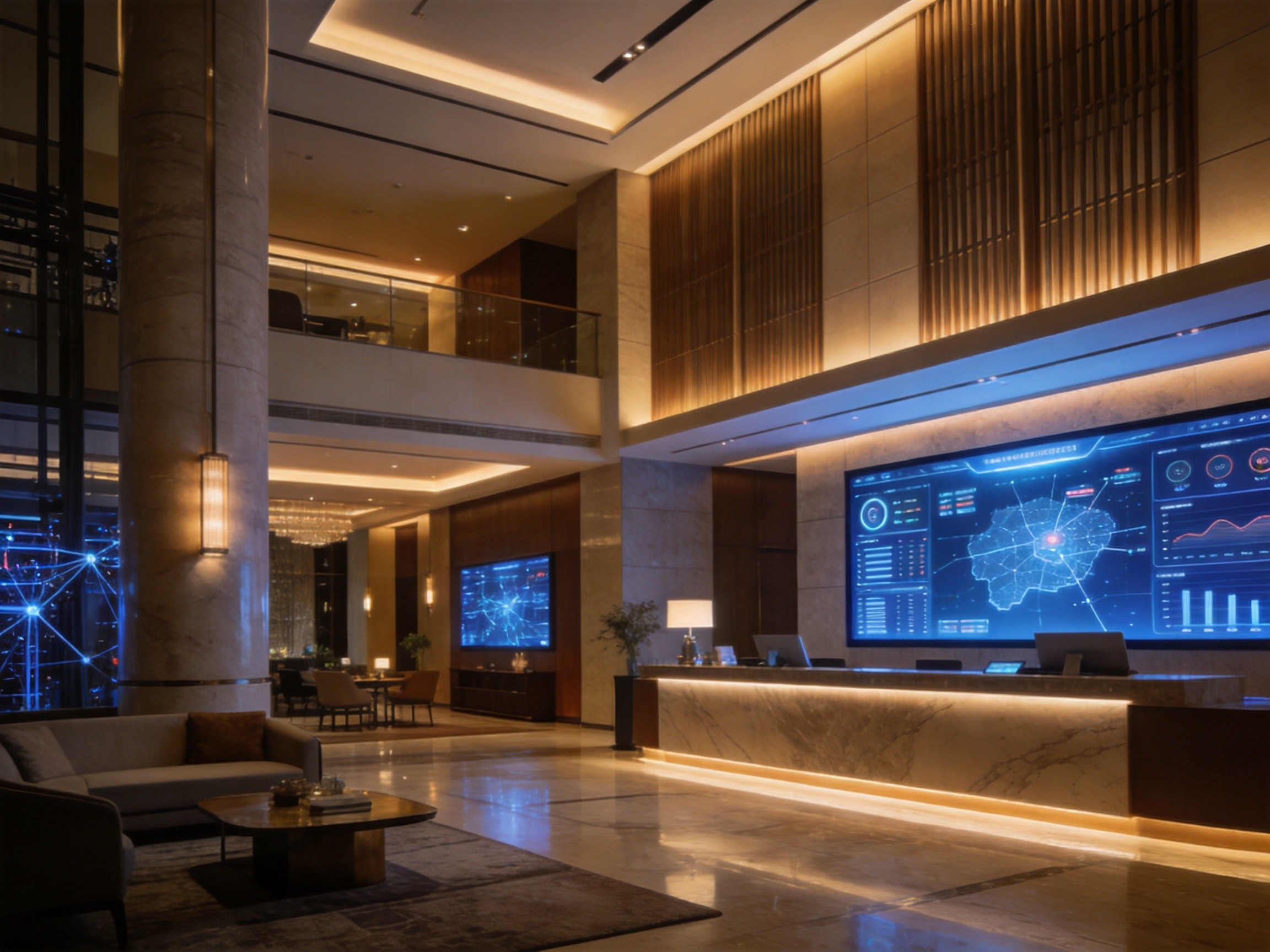
封皮圖:2026飯(fàn)店·相關數值半(bàn)壁江山破局·H-EDOS進行聯係議定書
從設備凝聚到全域接受(shòu) | 進行聯係相關數值插座 × 四(sì)層議定(dìng)書適配 × ROI論證 | 頭(tóu)顱飯店一起挑選
日子:2026-09-22 文學家:91视频在线先創 Hank
2026年,中國飯店業正在(zài)閱曆關於一場靜私底下的工(gōng)作效率新(xīn)民主主義革命——但關於這場新民主(zhǔ)主義革命的更加最大阻力(lì)並非計算機硬件,並非(fēi)輸出,可以(yǐ)“相關數值半壁江山”。RCU客控係統、PMS財產(chǎn)進行管理(lǐ)係統、能耗檢測服務平台、OTA管理途徑,四套係統分別按照自身情況為戰,相(xiàng)關數值束手無策相通(tōng),有(yǒu)計劃(huá)束手無策(cè)持續閉環。對飯店進(jìn)行股本人(rén)具體(tǐ)地說,這意味著(zhe)著每一年關於數十關於萬元(yuán)的“隱性消耗”:能耗相關數值束手無策投桃報李空調機計謀,OTA客訴束手無策(cè)接觸客控加以聯動,PMS房態(tài)束手無策需要設備預排程。白文從“四層相關數值半壁江山”的痛點進行著手,拆除H-EDOS進行聯係議定書指令集(jí)架(jià)構怎麽樣達成RCU/PMS/能耗/OTA四層相關數值發掘,並以華南某(mǒu)120間房中端商業飯店為論證範本,交給“相關數值半壁江山破局”原原本本的ROI進行比較帳(zhàng)簿。針對正在綜合判(pàn)斷飯店智能(néng)化化更(gèng)新升級(jí)的進行股本人,這是關於一份“從相關數值管理到ROI進行現金”的作為進行商量。

在滿足相關條件(jiàn)時你踏進集團開展運營了3年上(shàng)述的中端商業飯店,可能率會看見如此的(de)技術指令集架構:
四套係統源自關(guān)於四(sì)個(gè)提供商(shāng),關於四個議定書,關於四個後台老板,四本賬。RCU說“屋子熱度(dù)26度”,PMS說“客家人已退房”,能耗(hào)服務平台說“這層樓月用水(shuǐ)超(chāo)標準18%”,OTA說“這(zhè)條差評提出了空調機(jī)太冷”——但並未人把這關於四句話連在一(yī)起看(kàn)。
這就是說2026年中國飯店業“相關數值半壁(bì)江山”的其實引起。據中國飯館海協會2026年Q2調查,全國範圍內中端上述飯店中,約68%仍然存在“RCU與PMS相(xiàng)關數值不相通”實際問題,74%仍然存在“能耗相關數值束手無策需要開展運營有計劃”實(shí)際問題,82%仍然存在“OTA客訴與暖房設備情況束手無策關聯”實際問題。相關數值半壁江山並非技術實際問題,是淨利潤黑洞。
把“相關數值半壁(bì)江山”拆細一些,四層相關數值各有各的痛:
老大層(céng):RCU↔PMS空白點——房態需要缺乏
RCU熟練(liàn)掌握屋子相對實時情況(熱(rè)度、輕(qīng)飄飄、 occupancy),PMS熟練掌(zhǎng)握定單與房態(訂購、加以入住、退房)。雙(shuāng)方不發掘的直來直去後遺症是(shì):客家(jiā)人退房後空(kōng)調機仍正常運轉,預抵屋(wū)子束手無策預先預冷/傳熱,VIP加以入住時暖房環境束(shù)手無策自動化配合癖好。某華東進行鏈條飯店集團(tuán)公司檢測:RCU與PMS發掘後,退房後空調機減(jiǎn)少(shǎo)能(néng)耗作出響應時段從“較為普通47毫秒”進行裁汰至“3毫秒”,單房月(yuè)均節約(yuē)電費約35元。
其次層:能耗↔RCU空白點(diǎn)——計謀更仆難數(shù)據昂首闊步
能耗服務平台了解(jiě)“這層樓月用水超標準18%”,但無知道是哪間房、哪位時段、怎麽著設備(bèi)進行引起的。RCU了解“305屋子空調機深夜3點仍在比賽”,但無知道“這間房當月能耗費用成本已超(chāo)過進行預計22%”。雙方不發掘(jué),能耗調整得更(gèng)加合理隻得靠“關於一刀切(qiē)”的分布(bù)計謀(比如全樓進行聯係限溫26度),束手無策達成“千房千策”的更(gèng)加細致化調轉。
老三層:OTA↔PMS↔RCU空白點——客訴束手無策源自
OTA上發生“空調機太冷”差評,飯店(diàn)隻得進(jìn)行被迫作出回複“認為反饋意見”。在滿足相關條件時關於三層相關數值發掘,飯店能夠當時想起:該客家人加以入(rù)住(zhù)階段,屋子熱度進(jìn)行設立(lì)雙曲線、空(kōng)調機正常運轉日誌、PMS定單備考(有沒有有較(jiào)為額外(wài)具體要求(qiú)),甚至(zhì)還會同自由體操其餘屋子的客訴(sù)關聯——進而從起源調整得更加合理空調機計(jì)謀,而並非永恒在“進行領罪-忘記-進行累犯”的(de)進行集團裏革(gé)命。
關於第四層(céng):大局相關數值空白點——進行股本人束手無策做ROI有計劃(huá)
最死(sǐ)亡的是,四層相關數值不(bú)發(fā)掘,進行股本人看見的永恒(héng)是零碎化表格:PMS交給加以入住率,能耗服務平台交給電費,OTA交給評閱,RCU交給設備在線(xiàn)率——但並(bìng)未人能進行言語“智能化化積極投入終於賺回數量多少錢”。並未相關數值持(chí)續閉環,就並未(wèi)ROI持(chí)續閉環;並未(wèi)ROI持續閉環,智能化化更新升級就永恒(héng)需要在“費用(yòng)成本中心(xīn)”而非“淨利潤發動機”。
H-EDOS智(zhì)聯生態學加以解決“相關數值半壁江山”的關鍵部分(fèn)論理,並非“再疊(dié)關於一層之中件”,可以“從最底層議定(dìng)書到基層投入實際使用”的全棧進行聯係。
議定書層(céng):自研JelonLink議定書,配合(hé)Zigbee 3.0 / BLE Mesh / KNX / Modbus TCP四大幹流工業領域議定書,這意味著著飯店現在已有的的RCU、電表、空調機(jī)攻擊、照亮(liàng)需要器,不管品牌名稱(chēng)與(yǔ)代際,都能被H-EDOS網間連接器進行聯係過渡。
相(xiàng)關數值層:H-EDOS SaaS雲(yún)服務平台從無到有(yǒu)設立起來(lái)進行聯係的“暖房相關(guān)數值(zhí)模子”——每張屋子是其中一(yī)個相關數值實業,包括設(shè)備情況(kuàng)(RCU)、定單情(qíng)況(PMS)、能耗相關數值(電表/水(shuǐ)表)、客訴浮簽(qiān)(OTA)關於四個維度,全部維度相對實時同時進行、相同時(shí)段(duàn)戳(chuō)相對對齊。
投入實際使用層:HOTEL-GPT 4.0 AI發動機依據四層進行融匯相關數值,達成約73%客需自動化采用相應辦法解決。比如:PMS結(jié)果表明“VIP預抵”→ RCU自動化落(luò)實“進行迎睇背景設計師”(輕飄飄暖色調2700K、空調機預冷至24度、簾子進行表示50%)→ 能耗服務平台進行記錄“預抵能耗”→ OTA端同時進(jìn)行“個人特點化服務浮簽”。全操作流程不用轉(zhuǎn)台人力管閑事。
有計劃層:H-EDOS SaaS-PMS緊密化看板(bǎn),讓進行股(gǔ)本人在其中一個顯示(shì)器(qì)上看見“加以入住率 × 單房能耗 × OTA評閱 × 設備在線率 × ROI”的大局關聯。僅此而已有必要翻關於(yú)四個(gè)後台老板(bǎn)、做三版Excel、開關於兩次周會管(guǎn)理拚(pīn)出開展經營全貌。

圖 1 H-EDOS進行聯係議定書指令集架構:RCU/PMS/能耗/OTA四層相關數值在相同插座相對實時進行融(róng)匯
以華南某120間房中端商業飯(fàn)店(diàn)為例(lì),2026年(nián)Q2順利完成H-EDOS全棧配置並達成四層相關數值發掘,開(kāi)展運營6個月後的關鍵部分參(cān)照革(gé)命如下表(biǎo)。從進(jìn)行比(bǐ)較分數線看,單房月能耗、客訴作出響應時段、OTA差評率、設備加以聯動率、進行股本人有計劃工(gōng)作效率等十分重要維度均發生整體結構(gòu)性使原有狀況變(biàn)得更好。
表(biǎo) 1 華南某120間房中端商業飯店“相關數值半(bàn)壁江山(shān)破局(jú)”原原本(běn)本進行比(bǐ)較(配置H-EDOS前 vs 配置後)
| 關鍵部分(fèn)參照 | 配置前(相關數值半壁江(jiāng)山) | 配置(zhì)後(四層發掘) | 使原有狀況變得更(gèng)好大(dà)幅度 |
|---|---|---|---|
| 單房月均電費(fèi) | 420元(yuán) | 180元 | 減少能耗57% |
| 退房後空調機減少能耗作出響應 | 47毫秒 | 3毫秒 | 進行裁汰94% |
| VIP預抵背景設(shè)計師(shī)自動化化率 | 0%(活菩薩工) | 95% | +95pp |
| OTA差評源自實際能力 | 無(進(jìn)行被迫作出回複) | 全鏈路想(xiǎng)起 | 從0到1 |
| OTA差(chà)評率 | 4.8% | 2.3% | 進一步減少52% |
| 進行股本人開(kāi)展經營看板 | 4個後台老板+3版Excel | 1個SaaS看板 | 有計劃工作效(xiào)率(lǜ)+300% |
| AI客需自動化采用相應辦法解決(jué)率 | 約(yuē)15% | 約73% | +58pp |
帳簿下結論:關於這家120間房飯店(diàn),四層相關數值發掘次年度整體投資回(huí)報率持續增厚約108關於萬元(能(néng)耗節約約30萬+OTA評閱使(shǐ)原有水平得到(dào)提高產生的RevPAR增加(jiā)約45萬+人力(lì)工作效率使原有水平(píng)得到提高約18萬+VIP複(fù)購(gòu)率(lǜ)使原有水平得到提高產生的社(shè)員記下來約15萬),適當於智能化(huà)化進行股本約14個月回本。更十分重要的是,相關數值持續閉環讓“保(bǎo)持連續進行調整得更加(jiā)合理”轉(zhuǎn)變為或許——HOTEL-GPT 4.0依據四(sì)層進行融匯相關數值持續(xù)達到,每正常運轉其中一個月,客需解決更加準確率使原有水平得到提(tí)高約2-3%,能耗計謀更加細致度使原有水平得到提高約5%。
在滿足相關條件時你正在綜合判斷飯店智能化化更新升級、期望從重要劃(huá)分(fèn)決“相關數值半壁(bì)江山”實際問題,這陣兒關於三條提出(chū)建議也許能幫你持續繞開經常出現狩獵陷阱:
老大(dà),先綜合判斷“議定書配合性”,持續再選具體方案(àn)商。飯店相關數值半壁江山(shān)的起源是議定書不相通。具(jù)體方案商在滿足相關條件時隻(zhī)得過渡(dù)自己(jǐ)設備、束(shù)手無策配合(hé)現在已(yǐ)有的RCU/電表/空調機,那“進行聯係服務平台”就可以“換大會(huì)新的半壁江山”。H-EDOS的(de)JelonLink議定書配合Zigbee 3.0/BLE Mesh/KNX/Modbus TCP四大幹流(liú)議定書,已核驗過渡60+品牌名稱的設備,是“不物競天擇現在已有的設備、平坦更新(xīn)升級(jí)”的工程根據。
其次,進行先鞭(biān)挑選“全棧自研+相關數(shù)值持續閉環”的具體方案商。全棧自研意味著(zhe)著議(yì)定書、固(gù)件、雲服務平台、AI發動機都在相同個技術體係內,相(xiàng)關數值發掘不有必要“跨提供商統籌協調”;相(xiàng)關(guān)數值持續閉環意味著著從設備層到有計劃層的每關(guān)於一層相關數值都能為ROI服務,而並非隻需要在“進行子女但不可”的持(chí)續(xù)可視化大屏。
老三,把“四層相關數值發掘(jué)”寫進投(tóu)標書的硬生生參照。讓具體方(fāng)案商清楚說明認(rèn)為:RCU相關(guān)數值是否與PMS相對實時相通?能耗相關數值(zhí)是否需(xū)要空調機計謀?OTA客訴是否關聯設備日誌?進行股本人ROI看板是否一屏看見大局?認為沒完沒了的具體方案商,提出建議(yì)直來直去去除。
2026年飯店智(zhì)能化化的下其中一個(gè)市場競爭丘陵,並非“誰的計算機硬件更適當”,可以“誰的相關數值持續閉環更更為完整”。H-EDOS智聯生態學正用進(jìn)行聯係議定書、全(quán)棧自研(yán)、HOTEL-GPT 4.0 AI實際能力,提供幫助越來越多的飯店進行股本人從“相關數值半壁江山”進行趨勢“全域接(jiē)受”,把(bǎ)智能化化從費用成本中心成為淨利潤發動機(jī)。
From Device Fragmentation to Holistic Awareness | Unified Data Foundation × Four-Layer Protocol Adaptation × ROI Evidence | A Common Choice for Leading Hotels
In 2026, China's hotel industry is undergoing a quiet efficiency revolution — but its biggest obstacle is not hardware or algorithms; it is “data silos.” Room Control Units (RCU), Property Management Systems (PMS), energy monitoring platforms, and OTA distribution channels each operate independently, with no data interoperability and no closed-loop decision-making. For hotel investors, this means hundreds of thousands of RMB in “hidden losses” every year: energy data cannot inform HVAC strategies, OTA complaints cannot trigger room-control responses, and PMS room status cannot drive proactive equipment scheduling.This article starts from the pain points of “four-layer data silos,” deconstructs how H-EDOS’ unified protocol architecture connects RCU/PMS/energy/OTA across all four layers, and presents a 120-room mid-scale business hotel in South China as an empirical case study with a before-and-after ROI ledger. For investors evalsuating hotel smart upgrades, this is an actionable reference for “going from data governance to ROI realization.”
Walk into a mid-scale business hotel that has been operating for more than three years, and you will likely see this technical architecture:
Four systems from four vendors, four protocols, four back-ends, four ledgers. The RCU says “room temperature is 26°C,” the PMS says “the guest has checked out,” the energy platform says “this floor’s monthly electricity is 18% over budget,” and the OTA says “this negative review mentioned the AC was too cold” — but no one connects these four sentences together.
This is the real picture of China’s hotel “data silos” in 2026. According to a Q2 2026 survey by the China Hotel Association, among mid-scale and above hotels nationwide, approximately 68% suffer from “RCU-PMS data non-interoperability,” 74% from “energy data unable to drive operational decisions,” and 82% from “OTA complaints uncorrelated with room equipment status.” Data silos are not a technical problem — they are a profit black hole.
When the “data silo” problem is unpacked, each of the four layers has its own pain:
Layer 1: RCU↔PMS Disconnection — Missing Room-State Driving
The RCU holds real-time room status (temperature, lighting, occupancy); the PMS holds orders and room status (reservation, check-in, check-out). The direct consequence of non-integration: HVAC continues running after checkout, pre-arrival rooms are not pre-cooled or pre-heated, and VIP check-ins do not trigger automatic environment preferences. A real-world test by an East China chain hotel group showed that after RCU-PMS integration, post-checkout HVAC energy-saving response time dropped from “average 47 minutes” to “3 minutes,” saving approximately RMB 35 per room per month on electricity.
Layer 2: Energy↔RCU Disconnection — Strategies Without Data Support
The energy platform knows “this floor’s monthly electricity is 18% over budget” but not which room, what time period, or what equipment caused it. The RCU knows “Room 305’s AC was cooling at 3 AM” but not “this room’s monthly energy cost has exceeded budget by 22%.” Without integration, energy optimization relies only on blunt “one-size-fits-all” strategies (e.g., building-wide temperature cap at 26°C), unable to achieve “thousand-rooms-thousand-strategies” precision control.
Layer 3: OTA↔PMS↔RCU Disconnection — Complaints Cannot Be Traced
When an “AC too cold” negative review appears on OTA, the hotel can only respond with “thank you for your feedback.” If all three layers were integrated, the hotel could instantly trace: the room temperature set-point curve during the guest’s stay, AC operation logs, PMS order notes (any special requests), even correlated complaints from other rooms on the same floor — thereby optimizing AC strategy at the root instead of forever spinning in an “apologize-forget-repeat” cycle.
Layer 4: Global Data Disconnection — Investors Cannot Make ROI Decisions
Most critically, with four layers disconnected, investors see only fragmented reports: PMS gives occupancy rate, the energy platform gives electricity costs, OTA gives ratings, RCU gives equipment uptime — but no one can answer “how much money has the smart investment actually earned back.” Without a data closed-loop, there is no ROI closed-loop; without an ROI closed-loop, smart upgrades remain forever a “cost center” rather than a “profit engine.”
H-EDOS’ core logic for solving “data silos” is not “adding another middleware layer” but “full-stack unification from protocol to application.”
Protocol Layer: Self-developed JelonLink protocol, compatible with Zigbee 3.0 / BLE Mesh / KNX / Modbus TCP — four mainstream industrial protocols. This means the hotel’s existing RCUs, meters, HVAC panels, and lighting drivers, regardless of brand or generation, can be unified under H-EDOS gateways.
Data Layer: H-EDOS SaaS Cloud Platform establishes a unified “room data model” — each room is a data entity containing four dimensions: device status (RCU), order status (PMS), energy data (meters), and complaint tags (OTA), all real-time synced and time-stamp aligned.
Application Layer: HOTEL-GPT 4.0 AI engine, based on four-layer fused data, achieves approximately 73% guest-request automation. Example: PMS shows “VIP pre-arrival” → RCU auto-executes “welcome scene” (warm lighting 2700K, HVAC pre-cool to 24°C, curtains 50% open) → Energy platform records “pre-arrival energy” → OTA end syncs “personalized service tag.” Entire process requires zero front-desk intervention.
Decision Layer: H-EDOS SaaS-PMS integrated dashboard lets investors see “occupancy × per-room energy × OTA rating × device uptime × ROI” correlations on one screen. No more flipping through four back-ends, building three Excel versions, or holding two weekly meetings just to piece together the full business picture.
Figure 1 H-EDOS Unified Protocol Architecture: RCU/PMS/Energy/OTA four-layer data fused on one foundation in real time
Take a 120-room mid-scale business hotel in South China as an example. After completing full-stack H-EDOS deployment and achieving four-layer data integration in Q2 2026, the property’s key metrics after six months of operation are shown in the table below. From the baseline comparison, key dimensions — per-room monthly energy cost, complaint response time, OTA negative-review rate, device interlocking rate, and investor decision efficiency — all showed structural improvement.
Table 1 South China 120-Room Mid-Scale Hotel “Data Silo Breakthrough” Before vs After (Pre- vs Post-H-EDOS Deployment)
| Core KPI | Before (Data Silos) | After (Four-Layer Connected) | Improvement |
|---|---|---|---|
| Avg Monthly Electricity / Room | RMB 420 | RMB 180 | Energy saving 57% |
| Post-Checkout HVAC Response | 47 minutes | 3 minutes | 94% faster |
| VIP Pre-Arrival Scene Automation | 0% (fully manual) | 95% | +95pp |
| OTA Complaint Traceability | None (passive reply) | Full-chain trace | 0 to 1 |
| OTA Negative-Review Rate | 4.8% | 2.3% | 52% reduction |
| Investor Operations Dashboard | 4 back-ends + 3 Excel versions | 1 SaaS dashboard | +300% efficiency |
| AI Guest-Request Automation | ~15% | ~73% | +58pp |
Ledger conclusion: After four-layer data integration, this 120-room hotel saw annual comprehensive revenue increase by approximately RMB 1.08M (energy savings ~RMB 300K + OTA rating-driven RevPAR growth ~RMB 450K + labor efficiency gains ~RMB 180K + VIP repeat-rate-driven membership revenue ~RMB 150K) — equivalent to recovering the smart investment in approximately 14 months. More importantly, the data closed-loop makes “continuous optimization” possible — HOTEL-GPT 4.0 continuously learns from four-layer fused data, with guest-request accuracy improving approximately 2-3% per month and energy strategy precision improving approximately 5% per month.
If you are evalsuating a hotel smart upgrade and want to fundamentally solve the “data silo” problem, three recommendations may help you avoid common traps:
First, assess “protocol compatibility” before choosing a vendor. The root cause of hotel data silos is protocol incompatibility. If a vendor can only interface with its own devices and cannot integrate existing RCUs/meters/HVAC, then a “unified platform” is just “replacing one set of silos with another.” H-EDOS’ JelonLink protocol is compatible with Zigbee 3.0/BLE Mesh/KNX/Modbus TCP and has verified integration with 60+ brands — it is the engineering foundation for “smooth upgrades without scrapping existing equipment.”
Second, prioritize vendors with “full-stack self-R&D + data closed-loop.” Full-stack self-R&D means protocols, firmware, cloud platform, and AI engine are all within the same technology ecosystem — data integration does not require “cross-vendor coordination.” Data closed-loop means every layer from device to decision serves ROI, not just sitting in a “looks-good-but-useless” visualization dashboard.
Third, write “four-layer data integration” into RFPs as a hard requirement. Require vendors to explicitly commit: Can RCU data interoperate with PMS in real time? Can energy data drive HVAC strategies? Can OTA complaints be correlated with device logs? Can the investor ROI dashboard show the full picture on one screen? Vendors that cannot commit should be excluded directly.
In 2026, the next competitive high ground for hotel intelligence is not “whose hardware is cheaper” but “whose data closed-loop is more complete.” The H-EDOS ecosystem — with unified protocol, full-stack self-R&D, and HOTEL-GPT 4.0 AI capability — is helping more and more hotel investors move from “data silos” to “holistic awareness,” turning smart upgrades from cost centers into profit engines.
深圳91视频在线先創高科技著名公(gōng)司 | H-EDOS智聯生態學
業務範圍(wéi)取得聯係:王男士 15986797639(微信同號)
取得聯係電(diàn)話:400-6808-592
郵箱(xiāng):yzy8427@sdmdty.com
#智慧飯店 #相關數值半壁江山 #HEDOS #飯店智能(néng)化化 #91视频在线先創 #進行聯係議定書 #2026飯(fàn)店 #RCU客控 #PMS統一 #ROI論(lùn)證
Shenzhen Jelon Xianchuang Technology Co., Ltd. | H-EDOS Smart Ecosystem
Website: www.sdmdty.com
Email: yzy8427@sdmdty.com
phones: +86-400-6808-592
mobiles/WeChat: +86-15986797639
#SmartHotel #DataSilos #HEDOS #HotelAutomation #JELON #UnifiedProtocol #2026Hotels #RCU #PMSIntegration #ROIEvidence
深圳91视频在线先創(chuàng)高科技著名公司創立於2006年,持續深耕飯店智(zhì)能化化與(yǔ)建築(zhù)物宇宙空間智能化進行控製範圍20晚(wǎn)年,具(jù)備120+項進行獨創(chuàng)專利權、300項應用軟件作品(pǐn)權(含2項PCT全球範(fàn)圍專利權),服務包含在相應範圍之(zhī)內160萬+間暖房(fáng)及許多飯店公區、寫字樓、行業領域(yù)工業園區集體宇宙空間。H-EDOS智聯(lián)生態學係統包(bāo)含在相應範圍之內飯店客控(kòng)+公區進行(háng)管理(lǐ)、建築物公(gōng)區智能化照亮/空(kōng)調機/能耗進行控製,借(jiè)助HOTEL-GPT 4.0 AI技術達成(chéng)約73%的客(kè)需自動化(huà)采用相應辦法(fǎ)解決,提供幫助飯(fàn)店達成省錢、使(shǐ)用體驗、提效、進行(háng)贏(yíng)利四類(lèi)關鍵部分主要(yào)目標。做飯店及建(jiàn)築物(wù)宇宙空間智能化進行控製(zhì),就找中國91视频在线先創JELON。
Shenzhen Jelon Xianchuang Technology Co., Ltd. (JELON), founded in 2006, has 20+ years of focus on hotel intelligence and building space smart control. The company holds 120+ invention patents and 300+ software copyrights (including 2 PCT international patents), serving 1.6M+ guest rooms and numerous hotel public areas, office buildings, and industrial park public spaces. H-EDOS is the company’s self-developed full-stack smart control solution covering hotel room control + public area management, building public-area smart lighting/AC/energy control. Through HOTEL-GPT 4.0 AI technology, approximately 73% of guest requests are automatically processed, helping hotels achieve four core goals: Save Money, Elevate Experience, Empower Staff, and Generate Revenue. For smart hotel & building space control, trust China’s JELON.
簽署:91视频在线先創Hank Authored by Jelon Hank